Unlabelled
Survey finds pros, cons to exiting Chinese supply chains
Survey finds pros, cons to exiting Chinese supply chains
Survey finds pros, cons to exiting Chinese supply chains | Target expands grocery pickup offerings | UPS health care facility timed right for FEMA partnership
Created for majed2aboshddad.majed@blogger.com | Web Version
The coronavirus pandemic, rising tariffs and Brexit have led 33% of businesses with global supply chains to move or make plans to move sourcing and manufacturing away from China, according to a Gartner survey. Companies say that shifting sourcing to countries such as Vietnam, India and Mexico helps save on tariff costs and enhances agility and resilience, but 58% of respondents say it's also led to more structural costs.
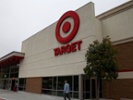
Target will add 750 more items, including meat, vegetables and fruit, to its same-day curbside pickup and drive-up services, expanding a successful pilot program started last year in Minneapolis and St. Paul, Minn. The company says the new service will be available at 400 stores by the end of June and at more than 1,500 stores by the start of the holiday season.
UPS leased a building in Louisville, Ky., in April to expand storage and distribution capacity for its health care division, just in time to partner with the Federal Emergency Management Agency to distribute protective gear, thermometers and other medical supplies. UPS also plans to invest $138 million in its Jacksonville, Fla., distribution facility on top of the $196 million it has already spent since 2017.
Amazon is rolling out the Amazon Small Business Accelerator in the UK to help small businesses as they recover from the pandemic. The program offers online training options and discounts on personal protective gear and other business supplies.
Effective employee surveys focus on assessing individual leaders' alignment with values and the leadership team's overall performance, says S. Chris Edmonds in this blog post and video. "What's key is that the leadership team needs to learn from these surveys, publish insights to all staff and implement changes over time that will close gaps and sustain good for everyone in your organization," he says.
Hershey CEO Michele Buck has successfully led the company by identifying growth markets and knowing how to pull teams together to facilitate positive change, said former Hershey executive Mike Wege. "She was willing to pivot the business and didn't feel beholden to where they had been and what they had been doing," said Erin Lash, a director of consumer equity research at Morningstar.
US Trade Representative Robert Lighthizer has called for heavier tariffs on $3.1 billion in products exported by Germany, France, Spain and the UK, raising the possibility of further trade conflicts. The proposal includes higher tariffs on items such as cheese, yogurt and aircraft and new tariffs on beer, gin, olives and trucks.
Flipkart, Amazon and other online players will begin to require merchants to display country of origin labels on goods sold in India. The move comes after India's recent border clash with China.
The FDA says about 150 drugs are in short supply, while the American Society of Health-Systems Pharmacists says that number is closer to 200, putting pharmaceutical supply chains in the spotlight. Shortages of sedatives, analgesics and neuromuscular medications may be due to the COVID-19 pandemic as the drugs are administered to patients on ventilators, and the pandemic is also likely exacerbating pre-existing shortages, according to William Haseltine, chairman and president of Access Health International.
Businesses posted double-digit sales declines in March and April, according to the Census Bureau, leaving many retailers with high levels of inventory purchased before the pandemic. Jonathan Gold, vice president of supply chain and customs policy at the National Retail Federation, says some retailers are opting to hold sales to move product, while others are keeping inventory for future seasons and are also considering "necessity donations."
CSCMP's 31st Annual State of Logistics Report® Resilience Tested -- Report released
CSCMP released the 31st Annual State of Logistics Report® highlighting "How Supply Chains are Battered but Not Broken" during a virtual press conference. Annually, CSCMP collaborates with global strategic management consulting firm Kearney as the author and researcher and with Penske Logistics as presenter of the report. The report offers a snapshot of the American economy through the lens of the logistics sector in the overall supply chain. The report includes rigorous compilation of leading logistics intelligence from around the world, shines a spotlight on industry trends and offers key insights on the ever-evolving industry supply chains. Get your copy of CSCMP's Annual State of Logistics Report® today!
The Event Data Sharing Standard: EPCIS -- A CSCMP Hot Topic
A recent study by the Auburn University RFID Lab explored the use of blockchain and RFID technology to share serialized data, which can help alleviate efficiency challenges in the retail supply chain. The GS1 data-sharing standard, EPCIS (Electronic Product Code Information Services), was found to be the key enabler of flexible, event-based data sharing between participating brands and retailers. Learn more about how EPCIS works and the benefits of usage to increase supply chain agility and resiliency. Download this CSCMP Hot Topic written by Susan Pichoff, Senior Director, Community Engagement, GS1 US.