| |
| |
| |
| Presented By Goldman Sachs |
| |
| Axios AM Deep Dive |
| By Mike Allen ·Sep 26, 2020 |
| Good afternoon and welcome to an Axios Deep Dive, led by world editor Dave Lawler, on the state of the global order following the just-concluded UN General Assembly. - Sign up for Dave's newsy, twice-a-week Axios World newsletter here.
Today's Smart Brevity™ count: 1,393 words, a 5-minute read. |
| |
| |
| 1 big thing: America's hinge moment |
 |
|
| Photo illustration: Aïda Amer/Axios. Getty Images photo: Saul Loeb/AFP |
| |
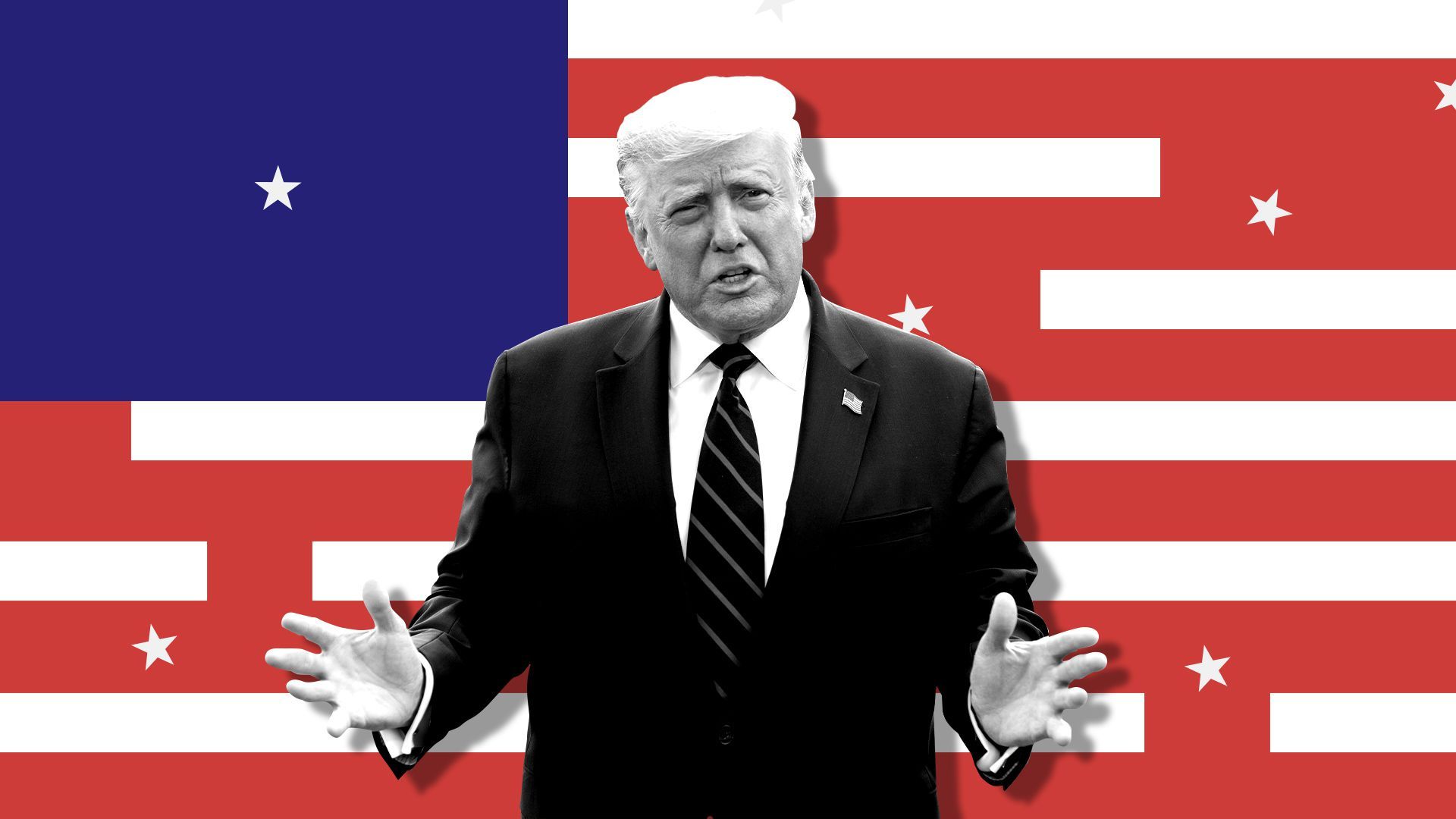
| The world may be living through the last gasps of America First — or just getting a taste of what's to come. Why it matters: President Trump's message at this week's virtual UN General Assembly was short and relatively simple: Global institutions like the World Health Organization are weak and beholden to China; international agreements like the Iran deal or Paris climate accord are "one-sided"; and the U.S. has accomplished more by going its own way. - "I am proudly putting America first, just as you should be putting your countries first," he declared.
Between the lines: The "U.S.-led" system that's governed international relations for 75 years has been shaken by four years of Trump. Many existing agreements and institutions would not survive a second Trump term. The other side: Joe Biden has vowed to put the global order back together again. - His view, expressed this week by his top foreign policy adviser Tony Blinken, is that "the world just doesn't organize itself" — America remains the country best positioned to do the organizing.
- Speaking on the "Intelligence Matters" podcast, Blinken added: "If Joe Biden's elected on November 3rd, I think a lot of people will see the last four years as an aberration."
French President Emmanuel Macron sounded a different tone in his long and impassioned UN address. - The current period of uncertainty, he warned, "is not a parenthesis that is opening and will then close."
- "There will be no miracle cure to the destructuring of the modern order," Macron lamented. Later, he added: "The world as it is today cannot come down to simple rivalry between China and the United States."
|
    |
| |
| |
| 2. The "sink or swim" General Assembly |
 |
|
| Photo Illustration: Eniola Odetunde/Axios. Getty Images photos: Thierry Monasse |
| |
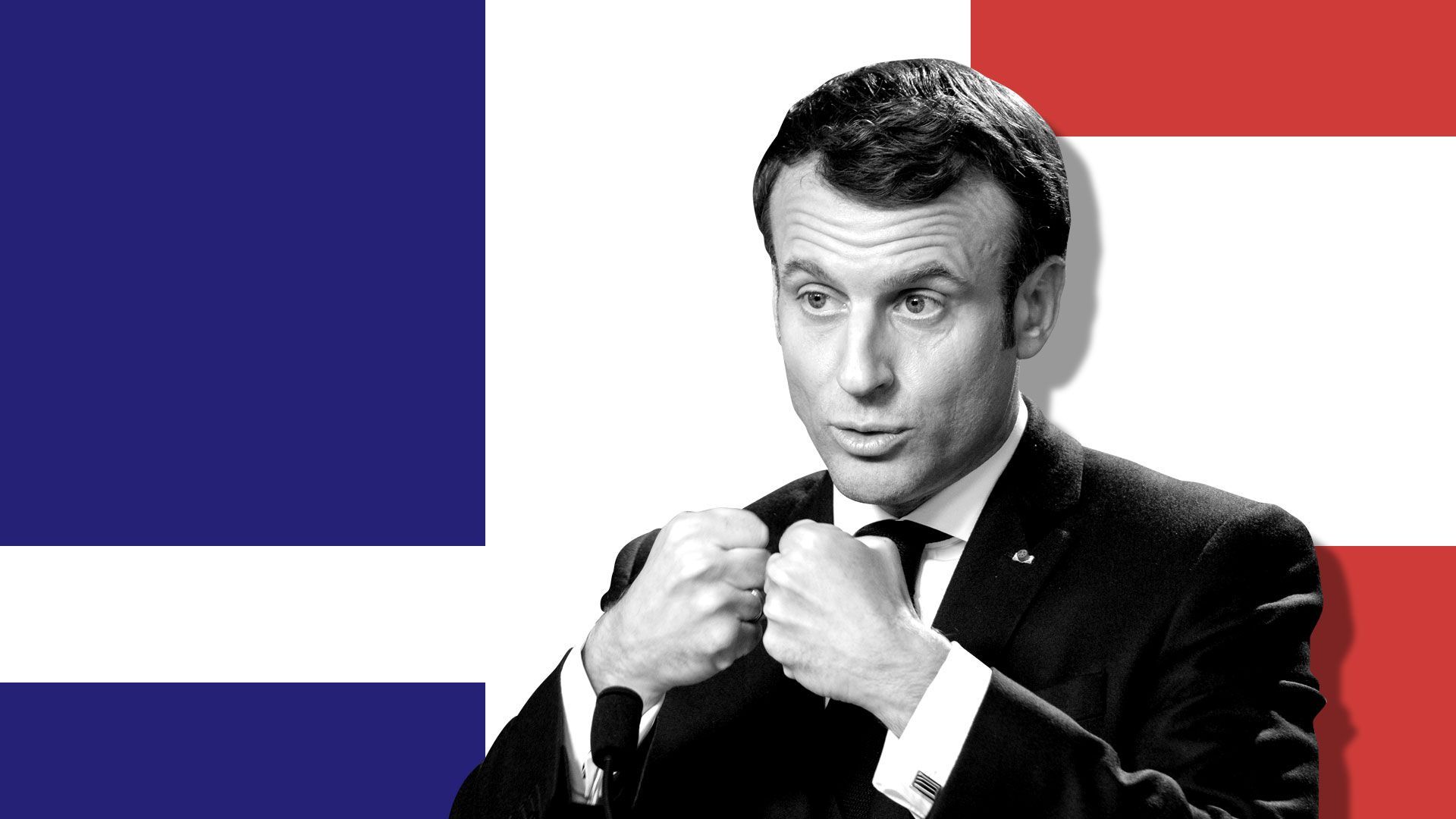
| France and Germany convened a summit of 60 countries on Friday to debate the future of that global order, and Macron insisted in his speech that Europe's voice within it be forceful and independent from America's. Yes, but: The world is in crisis now. The devastation wrought by the pandemic won't wait for an American election, let alone for a new global order to take shape. This year's General Assembly was another opportunity missed for any coherent global action on those fronts. - "It felt like a 'sink or swim' UNGA where each powerful country was speaking for itself," David Miliband, CEO of the International Rescue Committee and a former U.K. foreign secretary, tells Axios.
- "This notion that countries that are struggling are on their own, I thought, came through quite strongly this week."
The big picture: With the virus raging and America declining to step forward, the vulnerabilities of the global system have become glaringly apparent. - "The middle-sized powers have been preoccupied with their domestic situations, and obviously the big superpowers are fencing with each other," Miliband says.
Speaking shortly after Trump, China's Xi Jinping offered a stark contrast by claiming China would go carbon neutral by 2060, pledging additional funding for the WHO, and offering the chiding advice that "major countries should act like major countries." - Xi called for a "new type of international relations" that would ensure the "peace, development, equity, justice, democracy and freedom shared by all of us."
Between the lines: That new system would presumably adapt itself to China's growing clout and define many of the values Xi lauded very differently. |
| |
| |
| |
| 3. What China wants from the global system |
 |
|
| Illustration: Eniola Odetunde/Axios |
| |
| China is happy to work within existing multilateral structures, as long as they don't stop Beijing from doing what it wants, Axios China reporter Bethany Allen-Ebrahimian writes. The big picture: In his UN speech, Xi extolled the WHO, expressed "abiding commitment" to the UN charter, and warned against attempts to roll back globalization. But China has also ignored international rules and rulings when it sees fit. Between the lines of Xi's speech: - By "democracy," Xi means that a small number of countries — namely, Western democracies — shouldn't be able to dictate what less powerful but more numerous non-Western countries can do, especially within their own borders.
- By "development," Xi is referring in part to China's emphasis on the "right to development," a euphemism meaning that governments with human rights or corruption problems shouldn't be sanctioned or denied loans. He's also giving an implicit shout-out to China's Belt and Road Initiative, which builds infrastructure, and China's political influence, abroad.
- When it comes to the United Nations, the Chinese Communist Party has worked particularly hard to undermine the organization's ability to call out or take action on human rights violations.
The bottom line: Xi envisions a world in which a government faces no international scrutiny for how it treats its own people — and preferably, to quote a previous speech of his, a world with China "approaching center stage." |
| |
| |
| |
| A message from Goldman Sachs |
| $33 billion in bonds to support COVID-19 response |
| |
 |
| |
| In response to COVID-19, Goldman Sachs has helped clients raise over $33 billion to help alleviate the social and economic impact of the pandemic. This Climate Week, explore how the firm is driving inclusive growth through sustainable finance. |
| |
| |
| 4. Axios interview: Madeleine Albright on America's point of no return |
 |
|
| Photo illustration: Axios Visuals. Getty Images photos: Benjamin Lowy |
| |
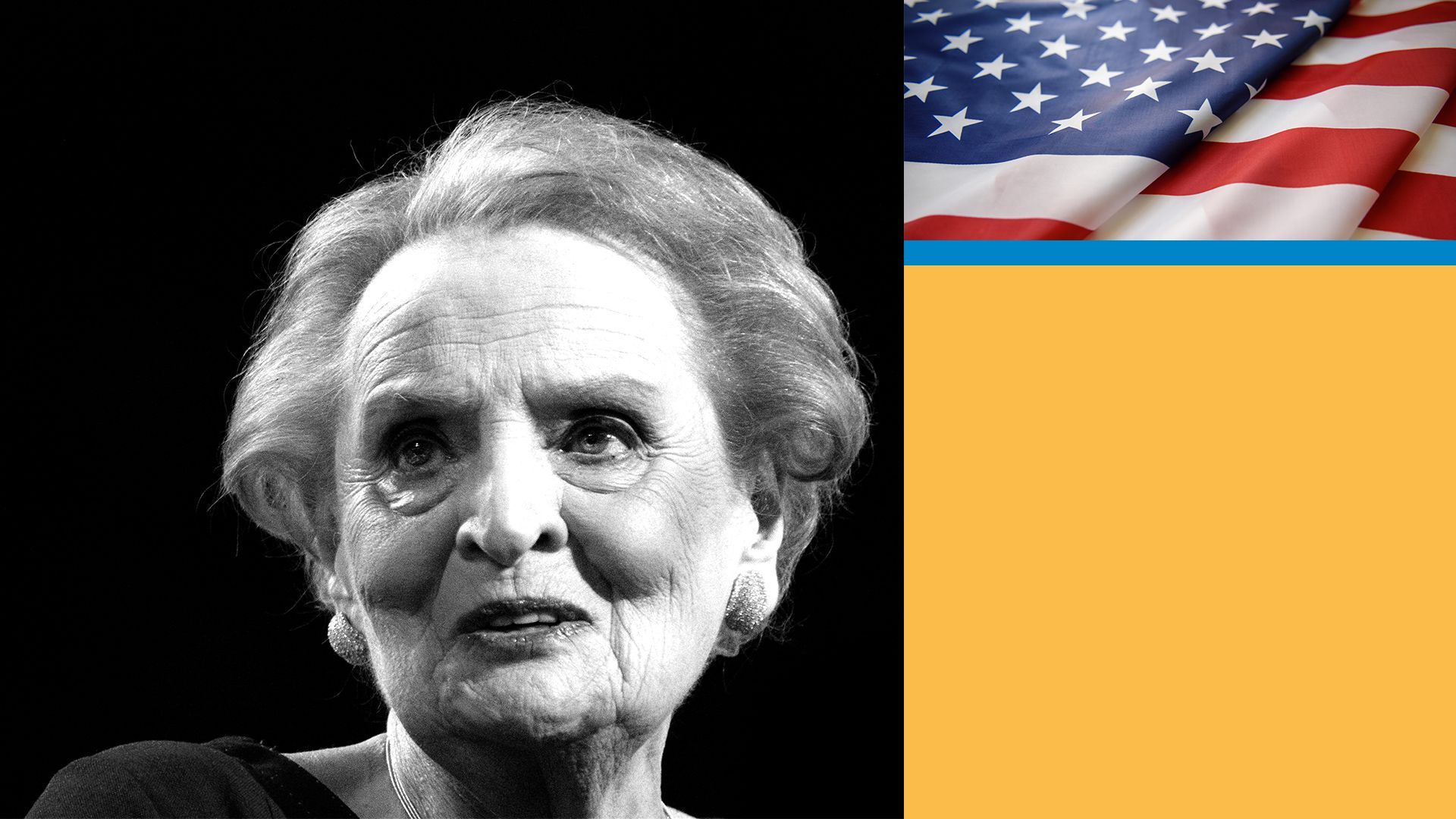
| "I'm disappointed," Madeleine Albright said when Axios' Dave Lawler asked about the lack of collective action on the pandemic, including at the UN this week. "Am I surprised? No." - Albright represented the U.S. — as ambassador to the UN (1993-1997), and as secretary of state (1997-2001) — when American power was near its apex.
- "There is nothing better than representing the United States," Albright tells us. "But you have to decide how you are going to use that power in terms of getting others to cooperate and be a part of a common solution."
On the one hand: Albright contends that American power is still there to be exerted on issues like global health, climate change and nuclear proliferation. - "It requires a kind of diplomacy that is in many ways built on day-to-day relationships — putting ourselves in another country's shoes," she says.
On the other: She believes U.S. leadership and the existing global order could be approaching a point of no return. - "Another four years of this, and it really is going to be increasingly difficult to persuade anybody that we are going to be dependable partners," she adds.
- "After a while, I think people will say: 'If you don't want to be a partner, then go do your thing and we'll do ours.'"
|
| |
| |
| |
| 5. A global vaccine push without the U.S. or China |
 Data: Gavi, The Vaccine Alliance; Map: Naema Ahmed/Axios There was one major announcement on the sidelines of UNGA: a global initiative to ensure equitable distribution of coronavirus vaccines now involves two-thirds of the world's population — but not the U.S., China or Russia. Why it matters: Assuming one or more vaccines ultimately gain approval, there will be a period of months or even years in which supply lags far behind global demand. If distribution is based only on the ability of a country to produce or buy vaccines at scale, experts warn, it will be much more difficult to bring the pandemic under control. How it works: COVAX — led by the WHO, the Coalition for Epidemic Preparedness Innovations and the Gavi vaccine alliance — is investing in the production of nine vaccines. It plans to distribute any that are approved to all participating countries. - The funding will come from wealthier countries and other donors, with poorer countries receiving subsidized access.
The U.S. is independently buying up doses of six vaccine candidates and has said it won't participate in COVAX, citing the influence of "the corrupt World Health Organization and China." - China isn't currently part of COVAX. It may still join, but it plans to give its citizens and some friendly countries priority access to any vaccine it produces.
Go deeper. |
| |
| |
| |
| 6. Setback for Palestinians as summit goes virtual |
 |
|
| Photo illustration: Aïda Amer/Axios. Photos: John Moore and Gali Tibbon/AFP via Getty Images |
| |
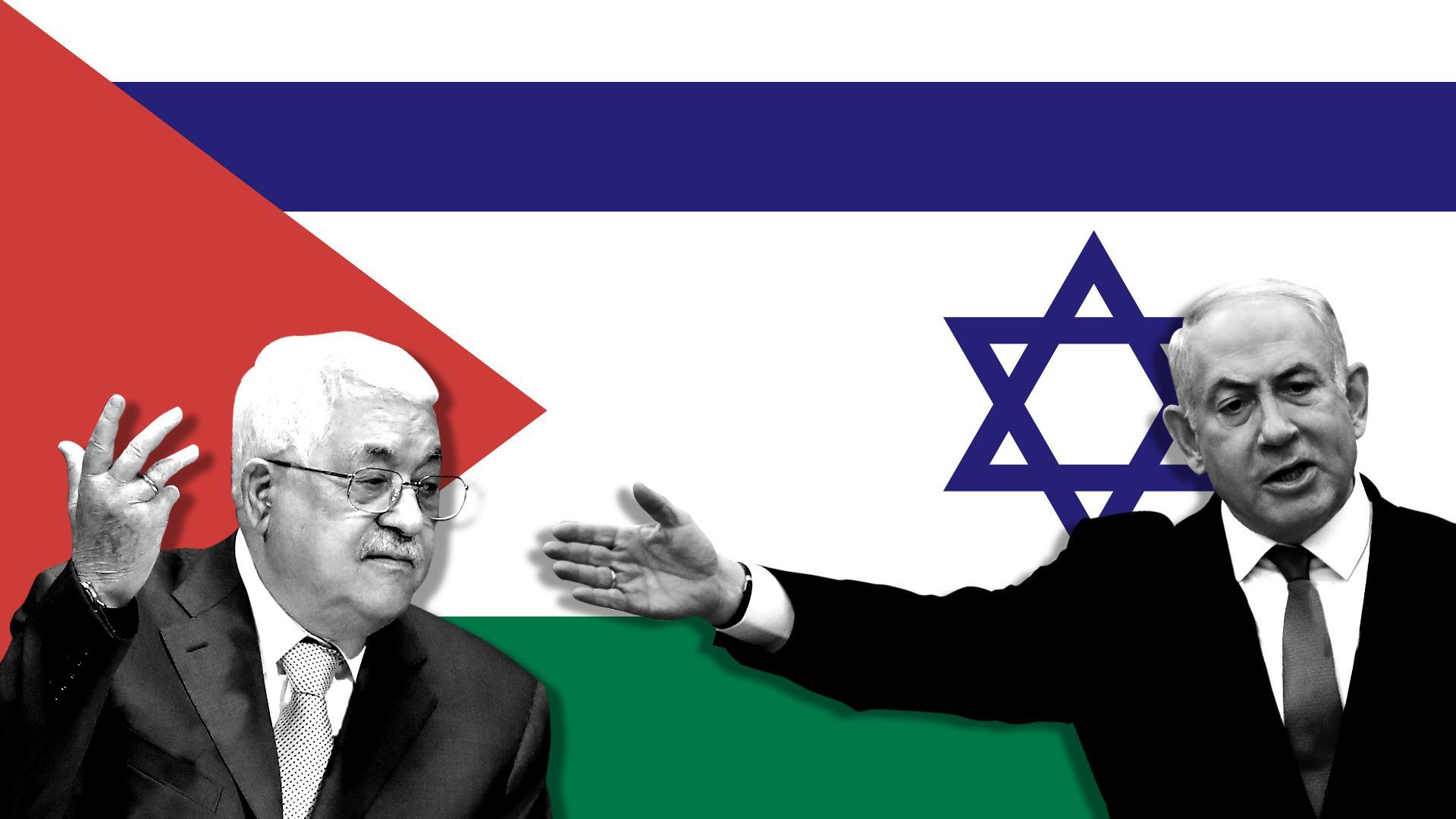
| The fact that world leaders couldn't gather in person for this year's General Assembly was another setback for Palestinian leaders, who are facing their worst diplomatic crisis in decades, Axios' Barak Ravid writes. Why it matters: The UN is a favorite venue for Palestinian President Mahmoud Abbas, and a very hospitable forum at which to mobilize international support. - Every year leaders pack the General Assembly hall to applaud a long, fiery speech from Abbas as a symbol of support for the Palestinians. It's often a dramatic diplomatic duel as Abbas speaks either before or after Israeli Prime Minister Benjamin Netanyahu.
- This year, Abbas had to settle for a 15 minute pre-recorded speech and forgo the usual parade of meetings with world leaders.
Where things stand: The Israeli-Palestinian conflict hardly featured in a General Assembly held soon after two Arab states normalized relations with Israel. What's next: Abbas' speech contained one action item: a call for an international peace conference on the Israeli-Palestinian conflict to be held right after the U.S. presidential election. - Abbas hopes Biden will win in November and wipe away Trump's policies on the issue.
Go deeper. |
| |
| |
| |
| Bonus: How the world views the UN |
 Reproduced from Pew Research Center's Global Attitudes & Trends. Chart: Axios Visuals  |
| |
| |
| |
| 7. By the numbers: UN club stops growing |
 |
|
| Illustration: Eniola Odetunde/Axios |
| |
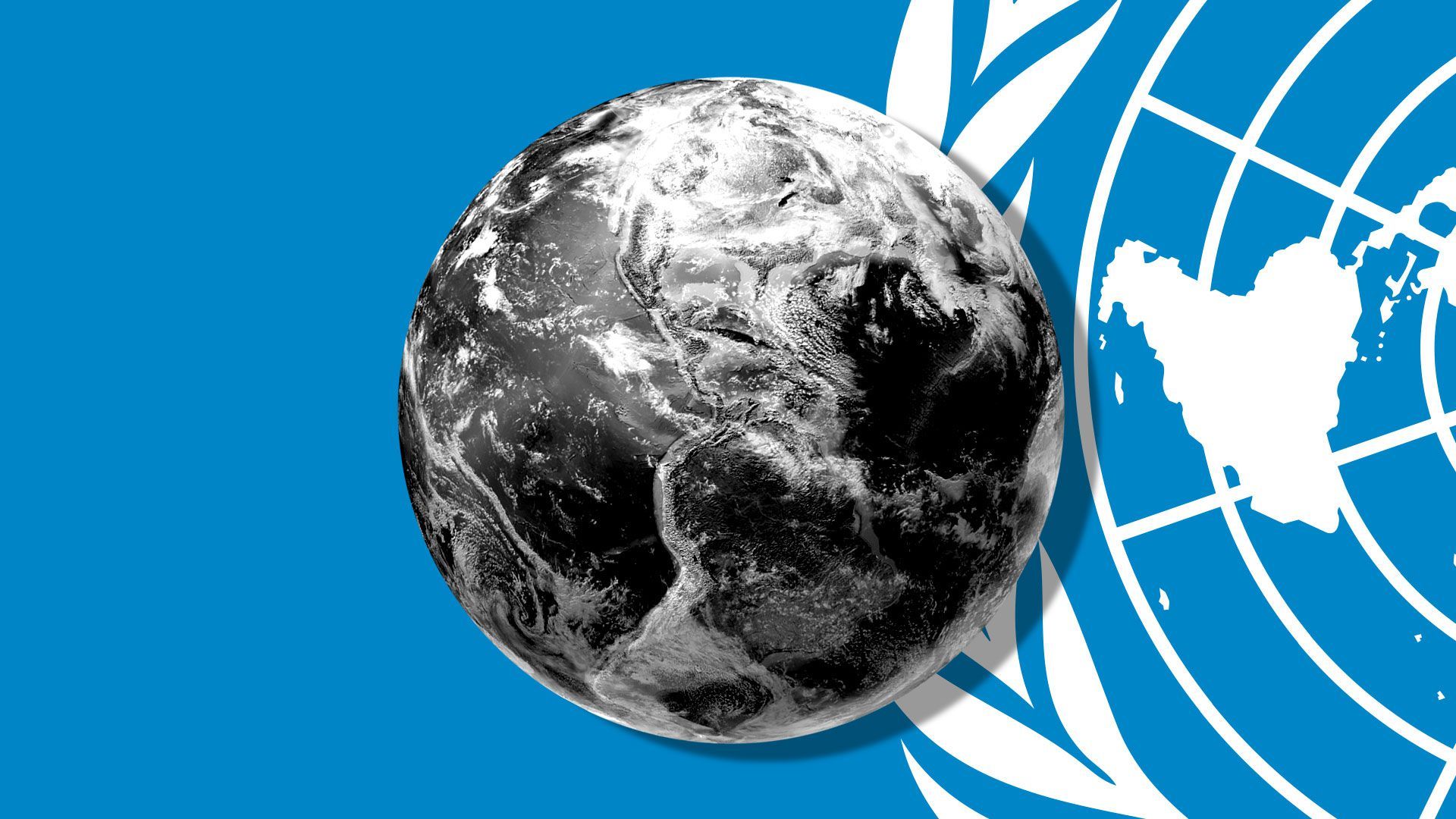
| This year marks the 75th birthday of the United Nations, which was founded in the embers of World War II with 51 member states. By the numbers: A wave of decolonization saw membership double by 1961. Countries were added nearly every year until 1984, and another wave of country creation began in the early 1990s with the collapse of the USSR. - In 2011, South Sudan became the 193rd and most recent addition. Since then, the map has frozen.
What to watch: This is the longest the UN has gone without adding a member and — with Palestine still an "observer state" — that seems unlikely to change soon. |
| |
| |
| |
| A message from Goldman Sachs |
| The first SDG-linked bond for a more sustainable future |
| |
 |
| |
| Working with Enel, one of the world's largest utility companies, Goldman Sachs structured the first bond linked to the UN's Sustainable Development Goals — tying Enel's cost of capital to its strategic commitment to sustainable progress. Learn more. |
| |


 اللباس التقليدي الحضرمي للرجال مرحبا بكم في سلسلة اللباس التقليدي الحضرمي .. لنتعرف معا على تراثنا ...وربما أن بعض هذه الملابس لم تعد مس...
 شغل الشاعر سعيد فرج باحريز رحمه الله الناس في المكلا وحضرموت عموماً باشعاره التي كانت لها مدلولات عميقة وثاقبة ومعانٍ بليغة وحكيم...

