| | | | | | | Presented By UNITEDHEALTH GROUP | | | | Vitals | | By Caitlin Owens ·Jun 30, 2020 | | Good morning. Today's word count is 1,012 or a 4-minute read. | | | | | | 1 big thing: Young people of color more likely to be hospitalized |  Reproduced from COVID-NET; Chart: Axios Visuals The majority of coronavirus hospitalizations among Latino/Hispanic Americans are among those ages 18–49, according to data from the Centers for Disease Control and Prevention. Why it matters: As coronavirus cases surge among young people, their risk of severe infection has a lot to with their race or ethnicity. By the numbers: People of color are much more likely than white Americans to be hospitalized for the coronavirus, even when age is accounted for. - American Indian or Alaska Native people have an age-adjusted hospitalization rate around 5 times higher than non-Hispanic white Americans. Non-Hispanic Black Americans and Hispanic/Latino Americans have hospitalization rates about 4.5 times that of white people, per the CDC.
- Minorities make up a disproportionate amount of coronavirus cases across the U.S., and their age-adjusted mortality rates are also much higher than white Americans'.
The bottom line: It's misleading for several reasons to say that young people have nothing to worry about when it comes to the coronavirus. One of those reasons is that it ignores the experiences of younger minorities. Go deeper: Why the coronavirus pandemic is hitting minorities harder |     | | | | | | 2. The coming child care crisis |  | | | Illustration: Aïda Amer/Axios | | | | With coronavirus cases spiking and no end in sight, schools and day care centers may not fully reopen in the fall, triggering a massive child care crisis for millions of American workers, Axios' Erica Pandey reports. The big picture: For months, America's parents have been juggling work, homeschooling and child care — doing whatever they can until the post-pandemic return to normalcy. But now, what seemed like a temporary predicament is turning into an ongoing ordeal. What's happening: Schools and school districts are starting to release their plans for the fall, and, to ensure safety, many — including those in Seattle; Omaha, Nebraska; and Fairfax County, Virginia — have come up with hybrid online and in-person schedules. - That means the continuation of remote learning — which leaves behind scores of kids without access to technology — and relentless stress for parents.
But school district plans are starting to reveal a scary reality for the 40% of U.S. workers between 20 and 54 who have children at home. - At the same time, more and more states are reopening — and calling employees back to work.
- That leaves few, if any, options for single-parent households or parents that cannot afford child care.
Go deeper. | | | | | | | | 3. The latest in the U.S. |  Data: The Center for Systems Science and Engineering at Johns Hopkins; Map: Andrew Witherspoon/Axios. This graphic includes "probable deaths" that New York City began reporting on April 14. Gilead will charge U.S. hospitals $3,120 for the shortest treatment course of its coronavirus drug remdesivir for typical patients with private insurance, according to an open letter from CEO Daniel O'Day. Arizona Gov. Doug Ducey (R) announced at a press conference Monday that he is ordering bars, clubs, movie theaters, water parks and gyms to close for 30 days in order to curb the spread of the coronavirus. - New Jersey Gov. Phil Murphy announced Monday that his state will indefinitely postpone indoor dining — originally set to resume Thursday — as coronavirus cases surge in states that moved quickly to reopen their economies.
- Jacksonville, Florida, announced Monday that it would require the use of face masks indoors and in public to help curb the spread of coronavirus.
Health officials in Los Angeles County are sounding the alarm over a sudden and rapid surge in new coronavirus cases and hospitalizations, the LA Times reports. The uptick has the potential to overwhelm the area's medical system, with health officials now projecting that LA County could run out of hospital beds in two to three weeks. Senate Majority Leader Mitch McConnell (R-Ky.) said in a floor speech on Monday that Americans must have "no stigma — none — about wearing masks when we leave our homes and come near other people." 30% of Americans say they trust President Trump and his administration to "get the facts right" on the coronavirus — a lower mark than respondents gave the Centers for Disease Control and Prevention (64%), their state governments (53%), local news (50%) and the news media in general (44%), according to a Pew Research Center poll released Monday. The novel coronavirus is spreading too widely and quickly to contain, CDC principal deputy director Anne Schuchat told The Journal of the American Medical Association Monday, warning that she expects "this virus to continue to circulate." | | | | | | | | A message from UNITEDHEALTH GROUP | | Why UnitedHealth Group is investing in affordable housing | | | 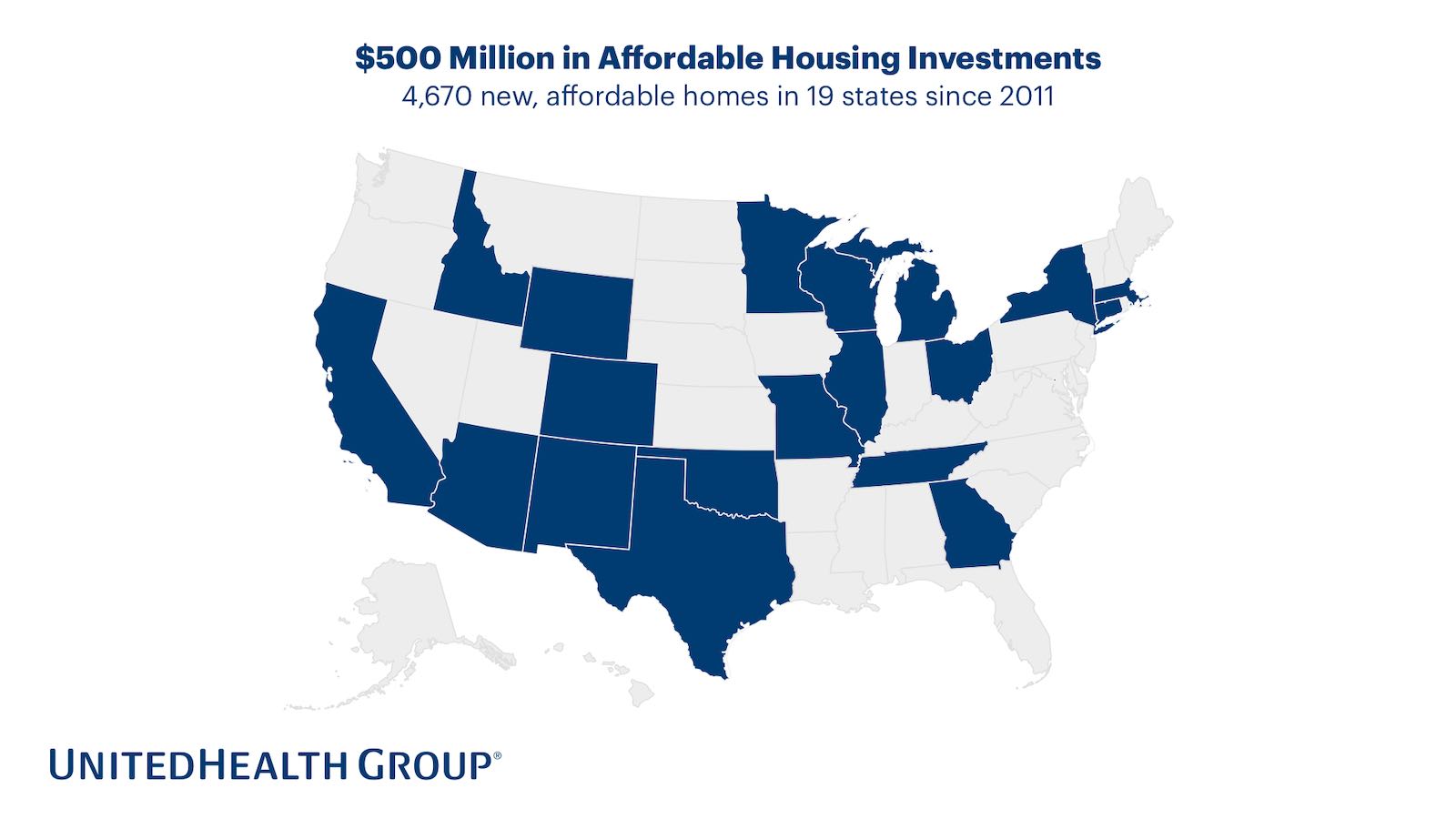 | | | | Housing security plays a key role in one's health. What we're doing: Invested $500 million in affordable housing since 2011, resulting in over 4,670 new, affordable homes in 19 states. See how we're working to address determinants of health, like housing, to help drive better health outcomes. | | | | | | 4. The latest worldwide |  While the massive coronavirus outbreaks in Brazil and the U.S. have garnered global attention in recent weeks, the per capita death rate has actually been higher in the hemisphere's third giant: Mexico, Axios' Dave Lawler reports. WHO director-general Tedros Adhanom Ghebreyesus said Monday the coronavirus pandemic is "far from over" and "is actually speeding up," as countries continue to reopen economies. Australia reported 53 new cases Monday — its largest single-day rise since April. Victoria is driving the surge, reporting 49 new cases amid a massive suburban testing blitz by the Australian army in the state capital, Melbourne. South Africa's health minister said Sunday the country was facing a "rapid rise" in cases, per the Washington Post, which notes it has a "higher infection rate and death rate than many other African nations." South Africa has reported over 138,100 infections and 2,400 deaths as of Monday. | | | | | | | | 5. Fearing fireworks and flower girls |  Data: Axios/Ipsos poll; Chart: Danielle Alberti/Axios Fourth of July celebrations and summer weddings are the latest triggers of American anxiety in this week's installment of the Axios-Ipsos Coronavirus Index. Why it matters: Summer's arrival is coinciding with surges in new virus cases around the country. That's putting a damper on national pastimes as people reconcile how to protect their families while celebrating ritual and tradition, Axios' Margaret Talev writes. Between the lines: Democrats, women and people over 65 are more likely to feel risky about gathering for "I dos" and Independence Day, while Republicans, men and adults younger than 30 are less likely to worry. - Nine in 10 Democrats — but only 65% of Republicans — think July 4 events carry a large or moderate risk combined.
- Women are more intensely worried than men: 48% of women and 41% of men assess July 4 events as a large risk.
- Just 41% of young people worry about outdoor weddings compared with 60% of seniors.
The big picture: As awareness has set in in red states as well as blue states about the surging case numbers, people are tempering their experiments around re-engaging in general. Go deeper. | | | | | | | | A message from UNITEDHEALTH GROUP | | UnitedHealth Group commits $100 million more to affordable housing | | |  | | | | 15 million people in the U.S. lack access to stable housing. To help address these needs, UnitedHealth Group has supported the development of 83 communities in 19 states, resulting in over 4,670 new, affordable homes since 2011. Learn how addressing housing insecurity can lead to better health. | | | | | | Axios thanks our partners for supporting our newsletters.
Sponsorship has no influence on editorial content. Axios, 3100 Clarendon Blvd, Suite 1300, Arlington VA 22201 | | | You received this email because you signed up for newsletters from Axios.
Change your preferences or unsubscribe here. | | | Was this email forwarded to you?
Sign up now to get Axios in your inbox. | | | | Follow Axios on social media:    | | | | | |


 اللباس التقليدي الحضرمي للرجال مرحبا بكم في سلسلة اللباس التقليدي الحضرمي .. لنتعرف معا على تراثنا ...وربما أن بعض هذه الملابس لم تعد مس...


